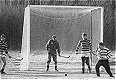




Boleskine Shinty Club have been in existence for a mere
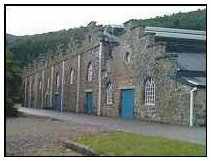
seventy six years, yet the game of Shinty has been rooted in the local area for one hundred years or more. The game developed in the area during the latter part of the 19th Century, mainly due to the influence of technology and the determination of entrepreneurs to develop the art of aluminium production, through smelting bauxite using electrical conduction. This process required the generation of electricity producing high currents (Amps). A smelter factory was commissioned in the latter part of the last century under the technical guidance of Lord Kelvin and was ready for production in the year 1894.
The production of Aluminium was by no means difficult for our fore bears, it was mass production that held the key! In the year 1889, a ton of Aluminium fetched a market price of £3000. Mid way through 1896 the price had dropped to
£160 per ton! The key to the merchandising
extravaganza?...Cheap electricity.
THE SCOTS MAGAZINE SEPTEMBER 1972 Links to local
history web sites of the district
Disappearing Windows reflections of events in the
Stratherrick & Foyers area
Local Heritage site for Stratherrick, Foyers & Dores
area
Local Heritage site for Strathnairn
area
© D M D 2000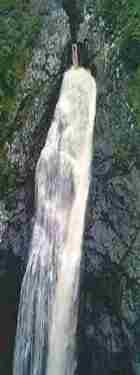 What Foyers, a small hamlet in the heart of the Scottish Highlands, had in it's favor, was an abundance of water. Not just Lochs and streams but one of the most spectacular and in the view of
engineers, powerful resources in the UK, the Falls Of
Foyers. The emergence of Hydro Electricity was about to
change the face of history.
What Foyers, a small hamlet in the heart of the Scottish Highlands, had in it's favor, was an abundance of water. Not just Lochs and streams but one of the most spectacular and in the view of
engineers, powerful resources in the UK, the Falls Of
Foyers. The emergence of Hydro Electricity was about to
change the face of history.
Locals and professional tunnel
builders were employed to hew a tunnel 1.5 miles long
through some of the hardest rocks known to man--Granite. The
odds were against them but, duly, on time, the tunnel was completed and the first ingot of the world's most desirable
metal was delivered in the year 1894.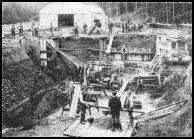 Through the diversion of
the catchment area for the River Foyers there was no
shortage of water to turn the vertical generators at the
Smelter at Lower Foyers. This in turn produced ample electricity of the required amperage to be of use in the smelting process. Millions of tons of water were used
from the nearby hills to feed these generators and as a result
the Falls were rendered less than impressive due to the
diversion to the Smelter. In the first year of production,
the Foyers Smelter accounted for 200 tons of aluminium,
close to the world's total output at that time!
Through the diversion of
the catchment area for the River Foyers there was no
shortage of water to turn the vertical generators at the
Smelter at Lower Foyers. This in turn produced ample electricity of the required amperage to be of use in the smelting process. Millions of tons of water were used
from the nearby hills to feed these generators and as a result
the Falls were rendered less than impressive due to the
diversion to the Smelter. In the first year of production,
the Foyers Smelter accounted for 200 tons of aluminium,
close to the world's total output at that time!
The Falls of Foyers
The Falls may have been
tamed but they are still an awesome sight and well worth a
visit. However , be warned, stout shoes are essential for
the walk to the view point.
"Foyers has always been something of a Highland spectacular, to borrow a phrase from the world of entertainment. For generations the enormous leap of the River Foyers in its awful chasm provided countless visitors with a horror-delight sensation.
And so it goes on, from an article written in the early seventies by the Scots Magazine. The wording of the article may have been a little lacking in depth but they are, never the less, a true reflection on the atmosphere generated by the press at that time.
One hundred and four years ago came the British Aluminium Company, who took the power of the River Foyers to drive the first recognized hydro-electric scheme ever seen in Britain....."
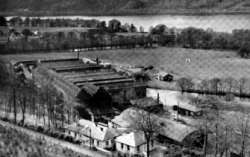
The Aluminium Company had decided a few years earlier, in 1967, that their first and most influential smelter should close due to the downturn in aluminium prices and the need to rationalize the company to become more competitive. The lack of space and the low tonnage of output from the Foyers plant was something that the Aluminium Company would have to address. They had already began designing the "ultimate" production works at Invergordon, where Bauxite was processed on site prior to the smelting process. They needed to free themselves from the low output and high overhead costs generated by the Foyers and Kinlochleven smelters, where the processed materials had to be transported, with ever increasing costs, to be smelted into Aluminium.
There was no warning of impending doom at the factory and when the redundancy notices arrived inside the pay packets, the shock was felt throughout the community. In fact one of our best players in recent times, Billy MacKay, was taken on as an apprentice on the Monday, only to be given his redundancy notice two days later! The whole community was left shocked by the sudden closure of the smelter. What was to happen now?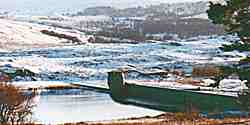 Once the dust had settled the community found themselves with an excess of fit and able working men. Many had taken the opportunity to move on as part of the redundancy package and re settled in Birmingham to work the recently built Aluminium Smelter, where skilled workers were at a premium. Many decided to wait on, until the promised works at Invergordon were completed. Others were given testimonials and found work in England with the steel industry, an example was the Hardy family, who had originated from Wales and spent many years at Foyers before having to move on to other areas to seek employment. Many others were left behind and having been brought up during the period of plenty at Foyers, they were either too old, or not prepared to move on to pastures new.
It was at this time that the locals remaining began to fight for some sort of compensation from the Aluminium Company and the Government. It was to be a fleeting, but much needed boost to the local area, when the North of Scotland Hydro-Electric board announced plans for an ambitious Pump Storage scheme to be built in late 1968. This was more than likely, a pay off from the Government for the destruction of a small community when the Smelter stopped production.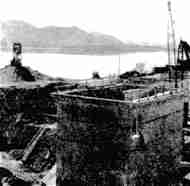
Work began in 1969 and carried on until 1974, when the Pump Storage scheme was commissioned. This involved the building of a tunnel, two and a half miles long from Loch Mhore due south, through the hills to Loch Ness. Lined with steel to a diameter of up to fifteen feet it was a major engineering undertaking which would test the contractors to the full. Edmund Nuttal were given the contract to carry out the works.
The original tunnel supplying the water for the old Aluminium Smelter used the same loch for its supply and you can still view the original dam today if you visit the area. With the old Aluminium works, the dam was used to regulate the amount of water which flowed into the river Foyers, which was then diverted via an intake, at Upper Foyers, through a tunnel to the Aluminium Smelter generators. The new Hydro Electric scheme required a significantly larger head of water to run the generators and a dedicated tunnel would have to be constructed to ensure water volume was correctly measured at all stages of the process. The original dam wall was raised by four feet to increase water volume available in Loch Mhore.
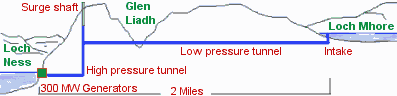
As the tunnel approached completion, it became obvious that the head of water supplied from Loch Mhore would not sustain the generators under severe load, thus the engineers had to retire to the drawing board. A new plan was put into place, which would delay the completion of the scheme, but ensure the quantities of water required for future use. This involved the building of a small but costly tunnel from the River Fechlin to the south of the area and diverting it into Loch Mhore via the river E. (The river E, one of the shortest true names in the world, check it out in the Guinnes Book of Records!). This delayed the project but proved to be a success as it guaranteed a full head of water at all times in Loch Mhore, increasing the catchment area for the loch from twenty square miles to eighty!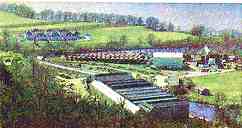 The Hydro Electric tunnel intake, was constructed near the local Post Office at Gorthleck and the only time the tunnel rose above land surface was at glen Liadh, approximately 1 KM from the generating station. Adjacent to the station, at about 0.3 KM to the south and above the infamous Boleskine House, a surge shaft was constructed to allow the back pressure of flowing water to be controlled as the main intake at the power station was closed on low demand or at the start of re-pump. This surge shaft rises almost 700 feet from the tunnel and emerges at the top of a hill above the generating station, an extreme feat of engineering in any book! Some of today's modern drilling techniques for oil exploration were adapted from projects such as this.
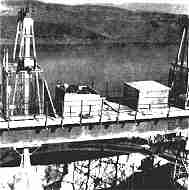
The very first project using natural water storage was built at Cruachan in Argyll-shire in the mid sixties, a very powerful generating station, it was the culmination of many years investigation into Hydro Generation. The advantages of this type of scheme influenced the Hydro Electric Board to seek out other areas, where they could commission a similar project on a tighter budget. Thus Foyers was chosen as an ideal spot for their next commercial project. With the closure of the Aluminium Smelter and a good source of local labour, the Hydro Electric Board etabled a bid to locate a Pump Storage Scheme at Foyers, which was welcomed unoposed by the majority of the areas populous.
The term pump-storage relates to the method of using water with great potential energy to turn generating turbines, turning the resultant output of Direct Current into Alternating Current and then passing this into the National Grid for domestic and commercial use.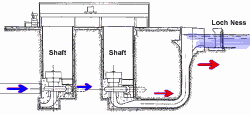
The secret to the success is the ability to reverse the turbines by the use of the same electricity generated to pump water from the output (Loch Ness) to the input (Loch Mhore), at night when, electricity is in less demand. Surplus generated electricity is supplied from other stations within the grid system while they are also on low demand to ensure that electricity is available the next day. These generaters are situated at the base of two generating shafts, inside the power station, to a depth of 114 feet, some fifty feet below the surface of Loch Ness. 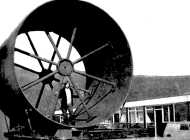 The advantage this system of generation has over conventional Hydro Generation is the fact that there is always enough potential generating energy present between the reservoirs of Loch Ness and Loch Mhore, even in periods of very dry weather. More water is simply re-pumped to Loch Mhore during these periods at 'off peak' times. Ultimately this type of scheme means fossil fuel generating stations such as Boddam near Peterhead need not burn more than is absolutely necessary and the grid can use nature to provide power during the daylight hours when demand is greatest.
We have implied that demand is greatest through the daylight hours. This is not strictly so. The reason is, that during the hours of darkness, the National demand for electrical power is easier to calculate, therefore to cater for. During daylight, demand is generally higher but more importantly, surges of high demand are more likely to occur. viz the wedding of Charles and Diana when everyone in the country put their electric kettle on during the break in the ceremony for a quick cup of tea! With 2000 Watts per kettle that was an extreme example of uncalculated demand. With a pump storage scheme such as Foyers, all that is required is to open up the intake at Loch Mhore to ensure full output of electricity to top up the National Grid system until demand is low and re-pump can take place.
So next time you switch on the toaster in the morning, you can be sure that you are using some of our Foyers electricity.... well in Britain at least!
For further local history of Stratherrick, Foyers and Strathnairn there is some
links below that may be of interest